
Article: Why Chocolate Costs More: A Chocolatier’s View of the Cocoa Crisis
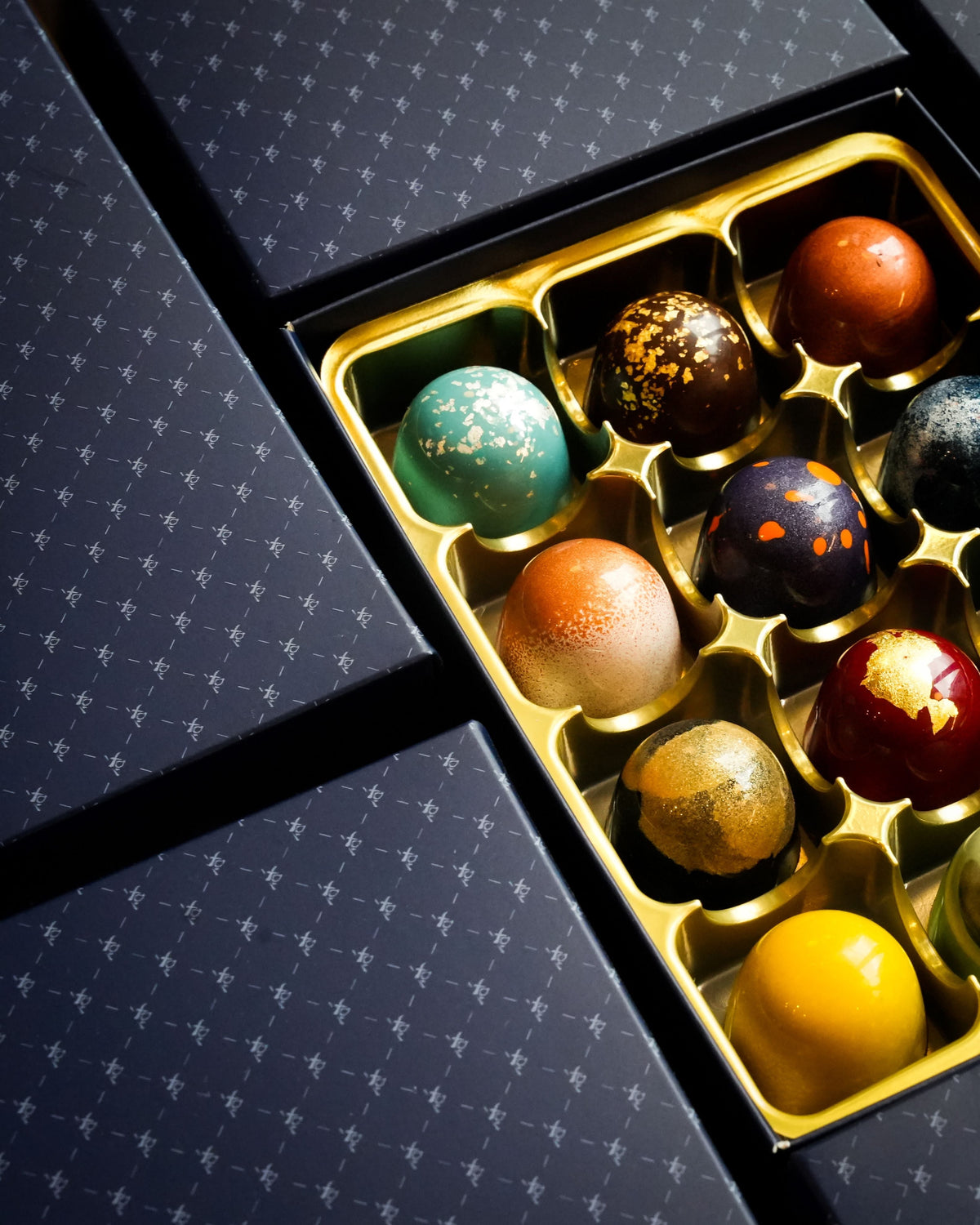
Why Chocolate Costs More: A Chocolatier’s View of the Cocoa Crisis
The price of chocolate has become a visible subject rather than a quiet industry concern. Cocoa markets have experienced extraordinary volatility, and manufacturers have changed pack sizes and recipes, and independent makers have had to reconsider products that may have worked for years.
It is tempting to reduce the situation to one sentence—“cocoa is more expensive”—but that hides the structure of the problem. Chocolate begins with a climate-sensitive commodity, that passes through labour-intensive farming and fermentation, and moves through a global supply chain before it reaches our kitchen in London. Pressure at any stage travels forward.
Cocoa cannot be produced quickly... real cocoa that is...
Cacao is a perennial tree crop. Farmers cannot respond to a sudden price rise in the way a factory can add another shift. New trees take years to establish, and yields depend on rainfall, temperature, soil health, disease management and access to labour and inputs.
This delay matters. When supply falls, the market cannot instantly create more beans. Shortages and expectations about future harvests can therefore produce dramatic price movement.
Weather and disease affect both quantity and quality
Much of the world’s cocoa is produced by smallholder farmers, with Côte d’Ivoire and Ghana central to global supply. Excess rain, drought, high temperatures and crop disease can reduce yields or damage beans. Difficult weather also complicates fermentation and drying, the stages that build flavour and prepare cocoa for safe storage.
Climate change does not mean every harvest fails in the same way. It increases uncertainty and can intensify the conditions under which existing agricultural problems become harder to manage.
Low farm investment creates long-term fragility, and instability
For many years, the low price paid for cocoa limited farmers’ ability to replace ageing trees, improve soil, manage disease and pay workers fairly. A higher commodity price may appear positive, but the amount visible on a market chart is not the same as income received by every farmer. Contracts, local pricing systems, crop losses, input costs and the timing of sales all affect what reaches the farm.
A healthier chocolate industry requires cocoa farming to be economically viable, not merely temporarily expensive.
The headline cocoa price is only one cost
A chocolatier buys finished couverture or other chocolate ingredients or the cocoa bean. The price paid also reflects cocoa butter, sugar, milk ingredients, processing, energy, transport, currency, packaging- sometimes a consumer can overlook these hidden additions....
There is usually a delay between a commodity-price movement and the invoice reaching a small maker. Prices may also remain elevated after a headline market falls because physical supply, manufacturing costs and replacement contracts have not returned to previous levels.
Cocoa butter creates additional pressure
Fine moulded chocolate depends on cocoa butter for fluidity, snap and melt and in our case, colour. When bean supply tightens, the value and availability of cocoa butter can become particularly important for chocolatiers making thin shells and detailed finishes- whatever the weather - we're going to feel it here in our London chocolate shop.
What small chocolatiers face
Independent makers have less purchasing power and fewer places to hide an increase. A recipe may contain several couvertures, fresh cream, butter, fruit, nuts, packaging and significant skilled labour. When cocoa rises alongside dairy, nuts, energy and wages, preserving the original retail price can quietly remove the margin needed to keep making the product.
The choices are uncomfortable:
- increase the retail price;
- reduce the size or number of pieces;
- simplify packaging;
- change the chocolate or filling;
- remove products that no longer work;
- absorb part of the increase and accept a lower margin.
No single response is right for every product. What matters is transparency and protecting the experience customers were promised.
Why switching to cheaper chocolate is not simple and for us, is simply not an option.
Couverture is part of the recipe’s structure. A replacement with a different cocoa percentage, cocoa-butter content or flavour profile can make a ganache firmer, a moulded shell thicker or a caramel taste sweeter. The product may require redevelopment, shelf-life review and new allergen information. Changing chocolate can be a legitimate technical decision. Changing it secretly while relying on the same quality claims is a quick way to lose customers...
Does expensive chocolate always support farmers?
No. A high retail price may reflect rent, branding, packaging, distribution or scarcity without guaranteeing better payment at origin. Conversely, a modest-looking product may use carefully sourced cocoa and restrained packaging Customers should look for specific information: named origins or suppliers where appropriate, credible sourcing standards, clear ingredients and a maker willing to explain how the product is made. Vague words such as “luxury” and “ethical” are not evidence by themselves. We have a line of connectivity we can rely on, two of the worlds largest producers of couveture who are based in Europe, do not feature on any of our products.
How customers can buy better during the crisis
- Choose flavour and quality over the largest possible box.
- Buy from makers who explain their ingredients and process.
- Expect good chocolate to have a real cost.
- Notice whether a price change protects quality or merely adds marketing.
- Store chocolate correctly so none is wasted.
- Try smaller, distinctive selections rather than treating quantity as the only measure of value.
XO Chocolate’s approach
At XO Chocolate London, the aim is to protect the qualities that define the product: carefully selected chocolate, clear flavours, fine shells and individual design. That sometimes requires changing prices, refining a range or making production more efficient. The goal is not to pretend that global pressure does not exist; it is to respond without quietly shrinking the chocolate.
For current international market reporting, the International Cocoa Organization publishes cocoa statistics and market information.
Explore XO’s handmade chocolate gift boxes, chocolate bars and full luxury chocolate collection.